
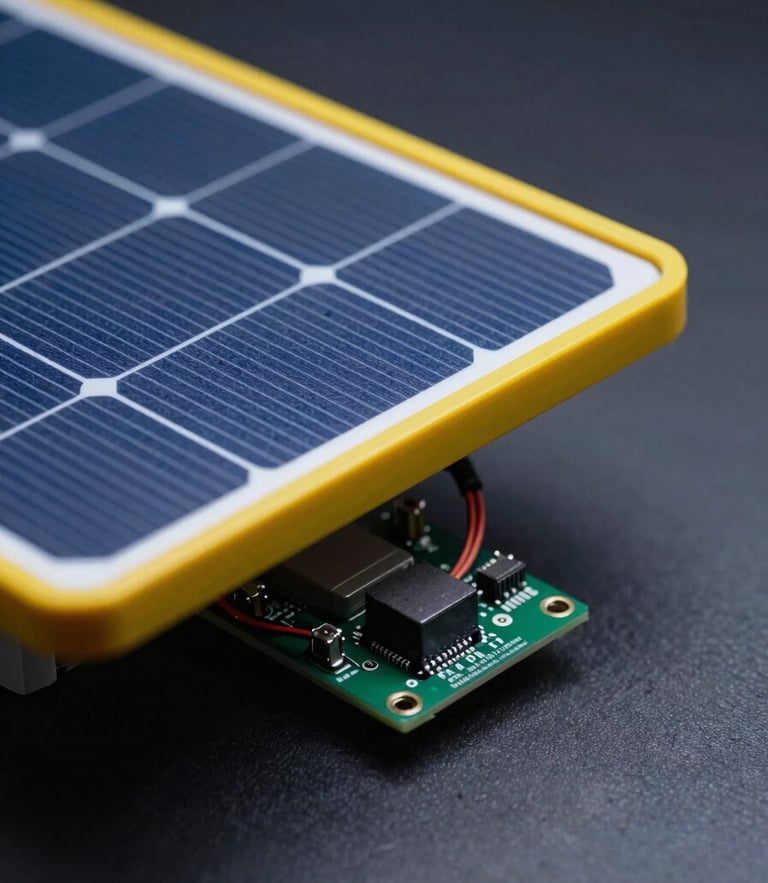
High-fidelity macro shot of the physical solar tracker prototype, focusing on the yellow-rimmed solar panel edge and the micro-controller wiring beneath. Moody low-key studio lighting with sharp blue accents, clean dark background.
/ ORIGIN STORY

Engineering the Sun's Path

Developed by Lakshya in collaboration with Robokalam Institute, this project bridges academic engineering with practical, open-component hardware. We prove that a ₹20,000 closed-loop tracking system can unlock up to 40% more solar yield.

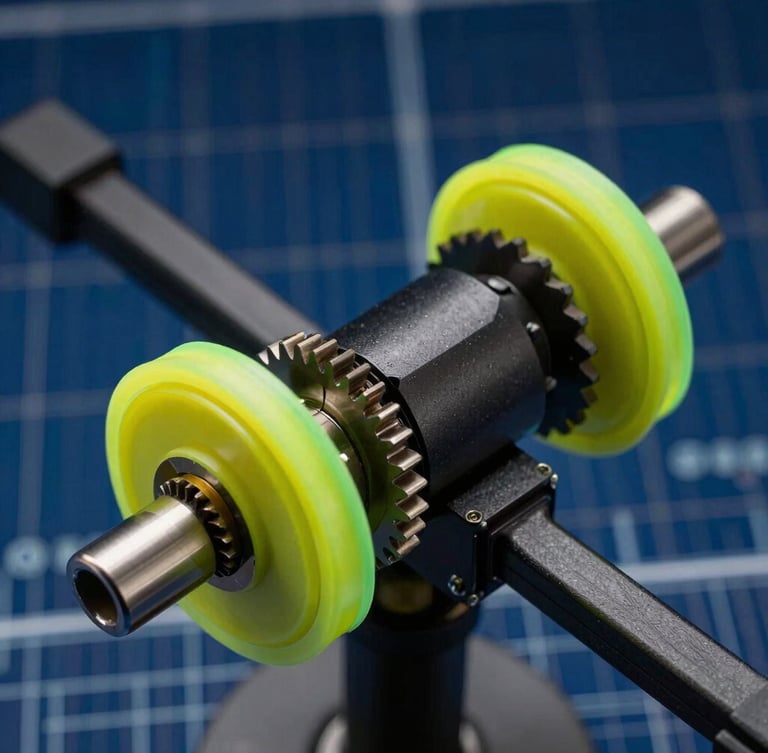
Macro close-up of dual-axis LDR sensors and servo gears on the solar tracker frame. Sharp neon-yellow and green rim lights highlighting the hardware edges, deep space-blue background, technical blueprint aesthetic.
+ THE INVENTOR

From Concept to Calibration

I developed this automated tracker to prove that high-efficiency solar harvesting doesn't require industrial scale. By combining LDR sensors with precise micro-controller logic, we created an accessible ₹20,000 prototype that optimizes yield in real time.

Every wire, code loop, and structural element was engineered to maximize torque and minimize power draw, establishing a reliable benchmark for open-component green technology.

■ ACADEMIC MENTORSHIP

Robokalam Institute

Providing the strategic guidance, technical resources, and engineering mentorship required to transition a raw hardware concept into a fully calibrated solar tracking prototype.

DEVELOPMENT PILLAR 01
DEVELOPMENT PILLAR 02

Technical Mentorship

Resource Access

Direct mentorship on micro-controller logic, dual-axis sensor calibration, and closed-loop tracking algorithms. This rigorous academic oversight ensured the system achieves maximum sunlight exposure throughout the daily solar cycle.

Strategic access to advanced testing equipment, structural prototyping hardware, and laboratory space. This collaborative environment allowed us to refine system durability against real-world environmental stressors.

Through this joint effort, we have successfully demonstrated that high-performance tracking logic can be implemented using accessible, cost-effective components.